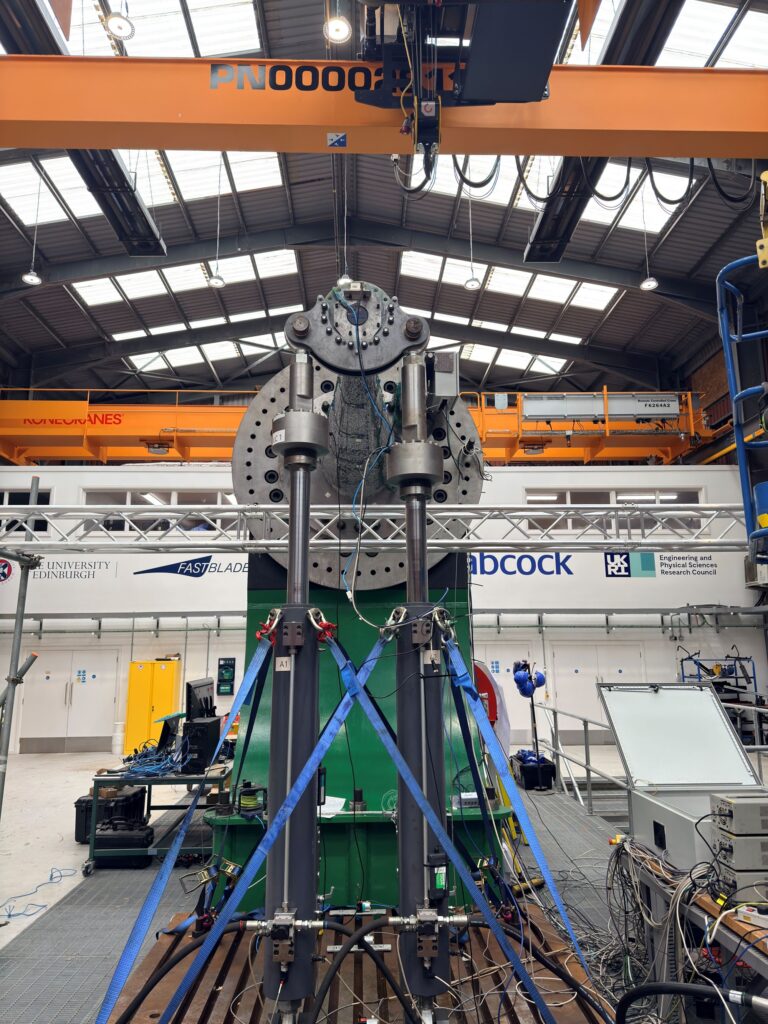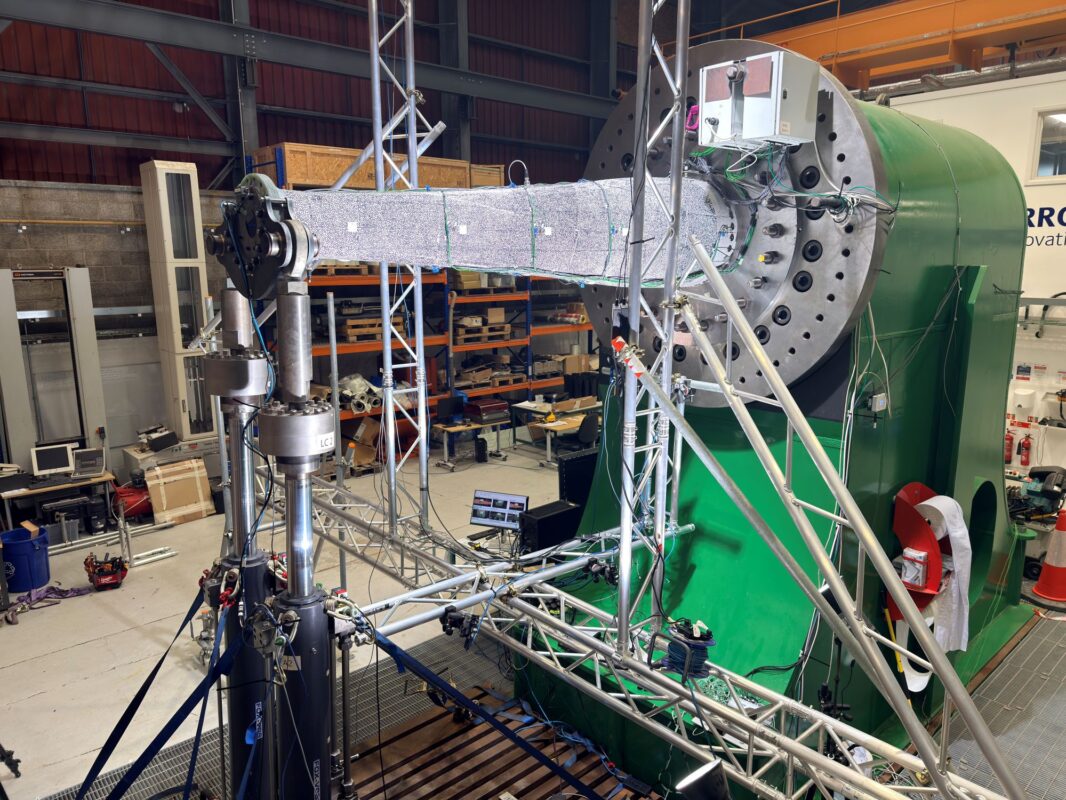
The University of Edinburgh and Orbital Marine Power have completed static and fatigue testing of a sub-scale spar for Orbital’s next-generation O2-X tidal turbine blade at FastBlade.
The spar is the main structural component within the blade, designed to carry the significant loads experienced by tidal turbine blades during operation. Testing a sub-scale prototype enables the project team to investigate how the structure performs under representative loading conditions and build confidence in the design ahead of full-scale testing.
The testing forms part of the EU-funded MAXBlade project, which is developing and validating advanced composite blade technology for Orbital Marine Power’s next-generation O2-X tidal turbine. Building on experience from the O2 turbine deployed at EMEC, the work aims to support improved blade performance, reliability and durability in demanding marine environments.
At FastBlade, the sub-scale spar was subjected to both static and fatigue testing. A twin-actuator set-up applied complex loading profiles, including simultaneous push and pull actions and torsional loading. The facility’s in-house control system enabled precise load profiles to be applied throughout the tests, while high-frequency data acquisition captured the response of the structure and supported detailed post-test analysis.
Completion of the sub-scale testing marks an important step in the MAXBlade test and validation programme. The results will now inform the next stage of blade development as the project progresses towards Level 5 full-scale structural testing and, ultimately, deployment of the O2-X tidal turbine at EMEC in Orkney.